
Tinnitus is the term used to describe the condition of perceiving a ringing, buzzing or whooshing noise in the absence of an external sound source. This is typically only experienced by the person with tinnitus and has a variety of different causes.
Treating the cause
Tinnitus can be caused by many things, and is usually a symptom of an underlying condition. The treatment for your particular tinnitus will depend on the condition that is causing it, the severity, any accompanying issues such as hearing loss, and the impact the tinnitus has on daily activities.
Common causes of tinnitus include:
- Hearing loss
- Exposure to loud noises
- Earwax buildup or blockage
- Abnormal bone growth in the ear
- Meniere’s disease
- Head or neck injuries
- Benign tumor of the cranial nerve
- Medication
- Aging
- Vascular disorders
- Stress or depression
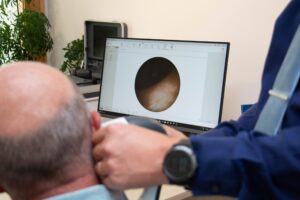
In order to find out the root cause of your tinnitus, your hearing specialist will conduct a complete medical history, as well as a complete examination.
Tinnitus Evaluation
Tinnitus is most often described as a ringing in the ears, but depending on the person, it can also sound like roaring, clicking, hissing, whooshing, pulsing, or even a buzzing. It can be soft or loud, high pitched or low pitched. You could hear it in one or both ears, and sometimes perceive multiple sounds at once.
Trained hearing healthcare professionals have developed tools and methods to effectively evaluate and diagnose tinnitus. Because tinnitus is so often caused by hearing loss, the Seaside Hearing team begins with a comprehensive audiological evaluation that measures the patient’s overall hearing health.
It is important to determine the specific gaps in a tinnitus patient’s hearing, because this often correlates to the nature and quality of their particular tinnitus. (For instance, high-frequency hearing loss often corresponds with high-frequency tinnitus.)
Specifically, the specialist may test for:
Tinnitus sound matching: Playing common tinnitus sounds back to patients, to help them identify their specific perception of tinnitus. One of our hearing healthcare professionals may slowly adjust the pitch, to create an exact audio recreation of the tinnitus. Frequency matching involves having you describe the sound, then performing sound matching to determine the relative intensity. Sound matching provides an important baseline for subsequent tinnitus management therapies, which are carefully customized for each individual.
Seaside Hearing may administer additional tests, depending on the patient’s specific symptoms, medical history, and/or potential risk factors.